Here is some information about Coconut Water:
'It's a natural isotonic beverage, with the same level of electrolytic balance as we have in our blood. It's the fluid of life, so to speak.'
During the Pacific War of 1941-45, both sides in the conflict regularly used coconut water - siphoned directly from the nut - to give emergency plasma transfusions to wounded soldiers..
Most coconut water is still consumed fresh in tropical coastal areas - once exposed to air, the liquid rapidly loses most of its organoleptic and nutritional characteristics, and begins to ferment.
Coconut Water is More Nutritious than whole milk - Less fat and NO cholesterol!
Coconut Water is More Healthy than Orange Juice - Much lower calories
Coconut Water is Better than processed baby milk- It contains lauric acid, which is present in human mother's milk
Coconut water is naturally sterile -- Water permeates though the filtering husk!
Coconut water is a universal donor-- Its identical to human blood plasma
Coconut Water is a Natural Isotonic Beverage - The same level we have in our blood.
Coconut water has saved lives in 3rd world countries thru Coconut IV.
Coconut water is the very stuff of Nature, biologically Pure, full of Natural Sugars, Salts, and Vitamins to ward off fatigue... and is the next wave of energy drinks BUT natural!', according to Mortin Satin, Chief of the United Nation's Food & Agriculture Organization.
Coconut water contains more potassium (at about 294 mg) than most sports drinks (117 mg) and most energy drinks..
Coconut water has less sodium (25mg) where sports drinks have around 41mg and energy drinks have about 200mg!
Coconut water has 5mg of Natural Sugars where sports and energy drinks range from 10-25mg of Altered Sugars.
Coconut water is very high in Chloride at 118mg; compared to sports drinks at about 39mg.
Data is based on a 100ml drink
Tuesday, 5 January 2010

Monday, 4 January 2010
High Heel Shoes
INFO: High Heel Shoes?
Ladies.. pls aware of this!
Guys please pass it on to the ladies u care about
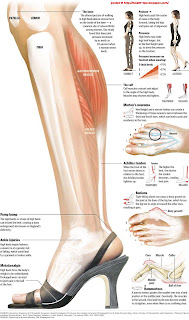
Ladies.. pls aware of this!
Guys please pass it on to the ladies u care about

Wednesday, 30 December 2009
Correct timing to take water.


Correct timing to take water will maximize its effectiveness to Human body.
Two (02) glasses of water - After waking up - Helps activate internal organs
One (01) glass of water - 30 minutes before meal - Help digestion
One (01) glass of water - Before taking a bath - Helps lower blood pressure
One (01) glass of water - Before sleep - To avoid stroke or heart attack
Sunday, 1 November 2009
5 Habits to Break Before It's Too Late
You want to live a long, full life -- to be young and lean forever. But you could be doing yourself more harm than good.

Getty Images
"Someday," you say, "I'm going to get my health back on track, after this next project," or "when I get back from my cruise," or "when the kids get a little older" ... C'mon, you know your list of reasons -- or what I call EXCUSES -- better than I.
Look, if you're waiting for some magical day to appear, you just may be waiting forever. These days do not "show up"; you show up for THEM. I have identified five critical areas, bad habits that many people mindlessly follow. Do you realize that each and every day of your life that you do not reverse these dangerous trends, you get farther and farther from your ultimate goal of living a fulfilling life?
Take a look at each area, determine how you stack up, and then make the fix today:
1) Stealing from sleep: Studies show that a minimum of seven to nine hours of uninterrupted sleep (at night) are essential for health. Sleep is the time when your body repairs and recovers from all of the metabolic processes that your body performs every second. Sleep supports healthy weight management, raises growth hormone, and heals the adrenals. If you are watching TV, working on your PC, or otherwise stimulating yourself so that you are unable to go to sleep by 11 PM, then establish the Power Down Hour and turn to more relaxing activities like baths, light novels, or cuddling with a loved one (or pet!) at least an hour or two before bedtime. Then ... retrain yourself to sleep through the night.
2) Skipping breakfast: How many times do you find yourself dashing out the door to start your day, only to discover that you forgot to eat? Listen, your body has just "fasted" overnight, and in order to fuel yourself for the day (and lower stress hormones), you must eat a balanced meal that includes proteins, fats, and carbohydrates. Otherwise, your body will turn on itself for fuel, and it isn't fat but muscle that it's going to target ... which will cascade into a very nasty sequence of health consequences that will make you fat, old, and tired before your time.
3) Blowing off exercise: If you think you can manage your health and weight through dietary means alone, it won't work. Period. Exercise is crucial for stimulating proper physical and hormonal response necessary for building muscle and bone, burning fat, letting you sleep, keeping you young, giving you energy -- the list is endless. More important is the CORRECT type of exercise, which involves high-intensity interval training, along with resistance workouts. If you can't find 20-30 minutes a day to incorporate these exercises into your life (oh yeah, that is ALL you need, by the way), then you can kiss your health goodbye.
4) Noshing at night: Strapping on the feedbag in the evenings basically signals your body to hold off on burning existing fat stores, raises stress hormones before bedtime, and screws up your body's natural digestive processes at a time when it should be ready to shut down and repair. If you are eating in a hormonally-balanced way during your evening meal, there is absolutely no need to munch afterward.
5) Not counting your beverages: One of the craziest things I encounter in my work is the lack of consideration of high-calorie, high-sugar drinks in the diet. Yes, those healthy "Jumbo Juices," designer coffee slurpees (hey, they may as well be, given all the sugar in them), and those harmless little cocktails every night, especially those fruit-flavored martini and tequila drinks, can really pack on the pounds in a hurry. Make the switch to healthier options like iced green tea -- or, my favorite, Emergen-C -- for some sparkling mineral replacements that not only satisfy, but also fuel and nourish!
JJ Virgin, PhD, CNS is a celebrity health and nutrition expert, author, public speaker and media personality. She is internationally recognized as the creator of the Weight Loss Resistance Revolution� and trains other health care professionals in her program. JJ is the President of the National Association of Nutrition Professionals, nanp.org.
Read more:http://www.momlogic.com/2009/10/5_diet_habits_to_break_before_its_too_late.php#ixzz0UOGfO7NP
Thursday, 22 October 2009
COCONUT WATER FACTS
COCONUT WATER
Here is some information about Coconut Water:
'It's a natural isotonic beverage, with the same level of electrolytic balance as we have in our blood. It's the fluid of life, so to speak.'
During the Pacific War of 1941-45, both sides in the conflict regularly used coconut water - siphoned directly from the nut - to give emergency plasma transfusions to wounded soldiers..
Most coconut water is still consumed fresh in tropical coastal areas - once exposed to air, the liquid rapidly loses most of its organoleptic and nutritional characteristics, and begins to ferment.
Coconut Water is More Nutritious than whole milk - Less fat and NO cholesterol!
Coconut Water is More Healthy than Orange Juice - Much lower calories
Coconut Water is Better than processed baby milk- It contains lauric acid, which is present in human mother's milk
Coconut water is naturally sterile -- Water permeates though the filtering husk!
Coconut water is a universal donor-- Its identical to human blood plasma
Coconut Water is a Natural Isotonic Beverage - The same level we have in our blood.
Coconut water has saved lives in 3rd world countries thru Coconut IV.
Coconut water is the very stuff of Nature, biologically Pure, full of Natural Sugars, Salts, and Vitamins to ward off fatigue... and is the next wave of energy drinks BUT natural!', according to Mortin Satin, Chief of the United Nation's Food & Agriculture Organization.
Coconut water contains more potassium (at about 294 mg) than most sports drinks (117 mg) and most energy drinks..
Coconut water has less sodium (25mg) where sports drinks have around 41mg and energy drinks have about 200mg!
Coconut water has 5mg of Natural Sugars where sports and energy drinks range from 10-25mg of Altered Sugars.
Coconut water is very high in Chloride at 118mg; compared to sports drinks at about 39mg.
Data is based on a 100ml drink
Here is some information about Coconut Water:
'It's a natural isotonic beverage, with the same level of electrolytic balance as we have in our blood. It's the fluid of life, so to speak.'
During the Pacific War of 1941-45, both sides in the conflict regularly used coconut water - siphoned directly from the nut - to give emergency plasma transfusions to wounded soldiers..
Most coconut water is still consumed fresh in tropical coastal areas - once exposed to air, the liquid rapidly loses most of its organoleptic and nutritional characteristics, and begins to ferment.
Coconut Water is More Nutritious than whole milk - Less fat and NO cholesterol!
Coconut Water is More Healthy than Orange Juice - Much lower calories
Coconut Water is Better than processed baby milk- It contains lauric acid, which is present in human mother's milk
Coconut water is naturally sterile -- Water permeates though the filtering husk!
Coconut water is a universal donor-- Its identical to human blood plasma
Coconut Water is a Natural Isotonic Beverage - The same level we have in our blood.
Coconut water has saved lives in 3rd world countries thru Coconut IV.
Coconut water is the very stuff of Nature, biologically Pure, full of Natural Sugars, Salts, and Vitamins to ward off fatigue... and is the next wave of energy drinks BUT natural!', according to Mortin Satin, Chief of the United Nation's Food & Agriculture Organization.
Coconut water contains more potassium (at about 294 mg) than most sports drinks (117 mg) and most energy drinks..
Coconut water has less sodium (25mg) where sports drinks have around 41mg and energy drinks have about 200mg!
Coconut water has 5mg of Natural Sugars where sports and energy drinks range from 10-25mg of Altered Sugars.
Coconut water is very high in Chloride at 118mg; compared to sports drinks at about 39mg.
Data is based on a 100ml drink
Thursday, 15 October 2009


Monday, 14 September 2009
Lose weight by eating more fiber
Lose weight by eating more fiber
Did you know it's possible to lose weight by only slightly increasing the amount of fiber you eat? Everyone agrees that including a decent amount of fiber in your diet is a good idea. Fiber in moderate quantities has many benefits for your body including good bowel functions and it helps to reduce cholesterol.
Fiber deficiency takes it toll on your bowels with increased risk of: constipation, bloating, hemorrhoids and colon cancer. Obesity, high cholesterol and heart disease are also linked.
There are two types of dietary fiber but what effect does each type of fiber have on your body?
Insoluble fiber comes from foods such as cabbage leaves, carrots, and beans, and is not absorbed by the body. This means it serves as a natural laxative and can help in keeping good bowel functions.
Because it is not absorbed the fiber passes relatively quickly through you digestive system. Insoluble fiber absorbs water and can help you feel full without adding calories.
Soluble fiber is found in foods like apples, oats, and rice. It is absorbed by the body and can help lower the amount of cholesterol in your body. When eaten soluble fiber forms gels in the presence of water which swell and make you feel full so you can eat less.
How much fiber should you eat?
There are many benefits to eating fiber from helping against heart disease to good bowel functions and helping to lower cholesterol but like anything eating too much will cause adverse effects. A healthily adult is recommended to eat 18 grams of fiber a day, roughly equivalent to a bowl of cornflakes for breakfast, an apple for lunch, a pear as a mid afternoon snack, and a serving of carrots and small quantity of baked beans in the evening. There are other sources of fiber such as bran flakes or rice so varying your diet is more than possible.
Don't change your diet rapidly overnight. Like all things in life, gradually change to a healthier lifestyle. By including more fiber in your meals you will feel fuller without adding calories so can eat less and lose weight.
How to Add More Fiber to Your DietAre you getting enough fiber in your diet? Fortunately, incorporating the recommended amount of fiber into your diet doesn't have to mean eating salads every day, if you follow these steps:
- Figure out how much more fiber you need.
Keep a food diary to record what you eat, and how much of it per day. Look up each food item on the Internet and see how much fiber each one contains. The average American gets 14 grams of fiber a day but here's what you're supposed to be getting: - Men under 50, 38 grams of fiber per day
- Men over 50, 30 grams of fiber per day
- Women under 50, 25 grams of fiber per day
- Women over 50, 21 grams of fiber per day
- Add fiber to your diet slowly.
If you are currently getting 10 grams of fiber a day, don't jump to 35 grams of fiber the next day. You need to give the natural bacteria in your digestive system time to adapt to your new fiber intake. What you'll want to do is make the following changes over at least a few weeks.
- Start with breakfast.
If you can get a fiber-packed breakfast routine going, you can probably add a solid 5-10 grams of fiber to your daily diet. - Eat a cereal with 5 or more grams of fiber per serving.
- If you have a favorite cereal you just can't let go of, add few tablespoons of unprocessed wheat bran or mix it with a high fiber cereal.
- If you like to eat toast in the morning, make it whole wheat bread. Alternatively, there are brands of bread and English muffins that have 5 or more grams of fiber per slice.
- Bake muffins that incorporate crushed bran cereal or unprocessed wheat bran.
- Add fruits like berries, raisins, or bananas to your cereal (or over your pancakes or waffles) to increase your fiber by 1-2 grams.
- Leave the skin on.
Incorporating more fruits and vegetables into your diet will add fiber, but only if you eat the skin, because that's where all the fiber is. So don't peel those apples before you eat them. If you're eating potatoes, try to leave the skin in the dish (such as if making baked or mashed potatoes).
It's also worth knowing that keeping the skin on potatoes when you cook them will help keep more vitamins and minerals in the flesh. Just don't eat any parts of skin that are green.
- Eat whole grains.
Not only will this offer the health benefits of added fiber, but it can also help you lose belly fat. A diet rich in whole grains changes the glucose and insulin response in your body, which hastens the melting of fat, and visceral fat (that deep layer of fat), is easier for your body to burn than the subcutaneous fat under your skin. - Eat more beans.
Beans are generally very high in fiber, as well as in protein (which is good for if you're building muscle). - Add them to soup or salads.
- Eat more Mexican food! Many Mexican dishes incorporate beans: burritos, enchiladas, tacos, quesadillas and nachos.
- Make chili.
- Eat hummus.
Subscribe to:
Comments (Atom)